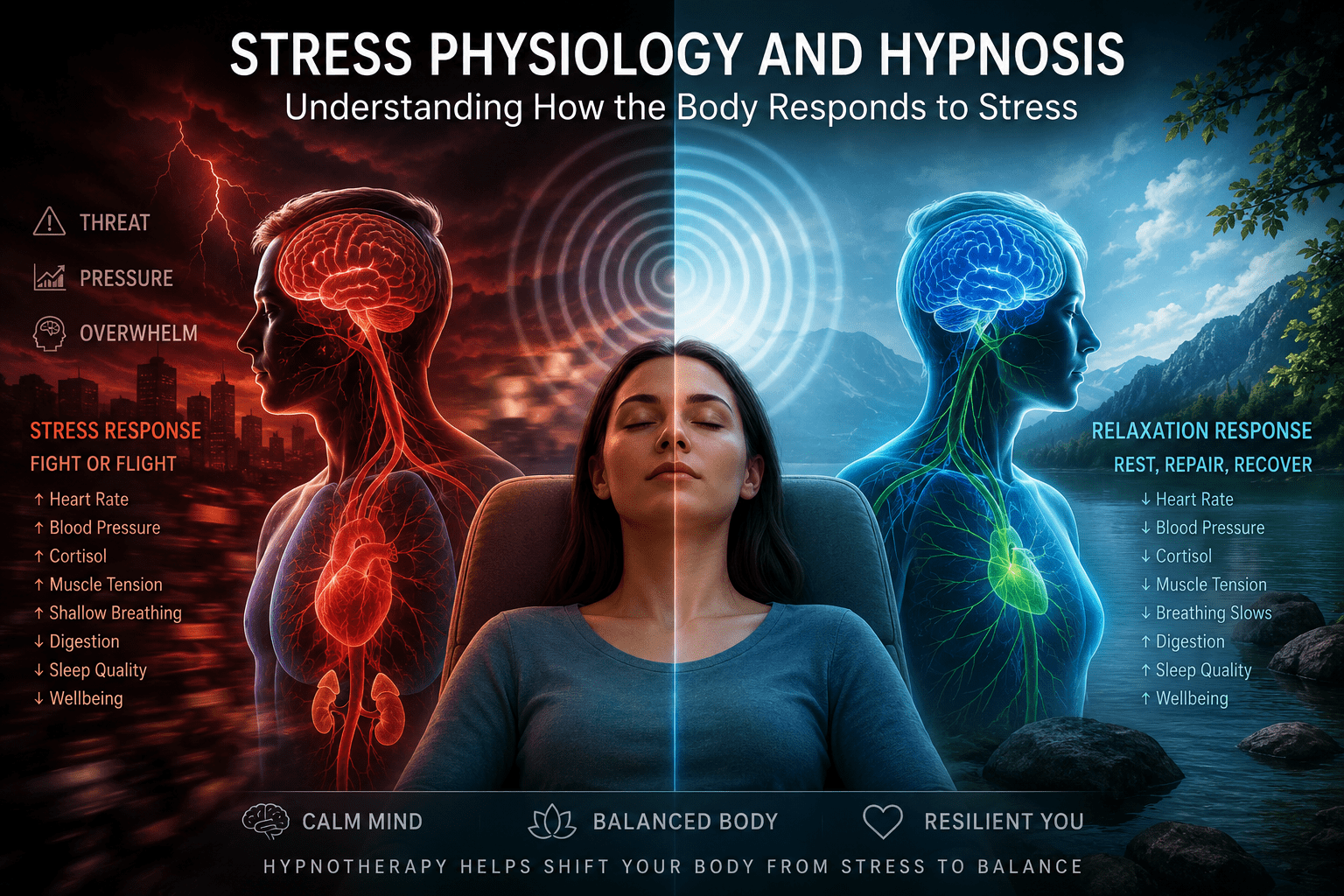
Stress Physiology and Hypnosis: Understanding How the Body Responds to Stress
Modern life exposes us to ongoing physical, emotional, and psychological stress. While the stress response is essential for survival, remaining in a prolonged state of stress can negatively affect both body and mind. Hypnotherapy offers a practical way to help calm this response, supporting healthier nervous system function and improving emotional wellbeing.
What Is Stress Physiology?
Stress physiology describes the way your body reacts when it perceives a challenge or threat. Within milliseconds, the brain activates two major systems:
The sympathetic nervous system (SNS), responsible for the “fight, flight, or freeze” response.
The hypothalamic-pituitary-adrenal (HPA) axis, which releases stress hormones including cortisol.
These systems are designed to protect us during genuine danger. However, modern stressors such as work pressures, financial concerns, relationship difficulties, or ongoing anxiety can repeatedly activate these same biological responses.
What Happens During the Stress Response?
When the sympathetic nervous system becomes activated:
Heart rate increases.
Breathing becomes faster and shallower.
Blood pressure rises.
Muscles tighten.
Digestion slows.
Attention becomes focused on potential danger.
Stress hormones prepare the body for immediate action.
While these changes are beneficial during emergencies, chronic activation may contribute to anxiety, poor sleep, fatigue, headaches, digestive problems, persistent muscle tension, and reduced emotional resilience.
The Role of Hypnosis
Hypnosis is a naturally occurring state of focused attention and increased responsiveness to helpful therapeutic suggestions.
During clinical hypnosis, people experience reduced physiological arousal, slower breathing, and greater physical relaxation and general calmness.
Research suggests hypnosis is often associated with decreased sympathetic activity and increased parasympathetic activity—the body’s “rest, repair, and recover” system.
Rather than simply encouraging positive thinking, hypnotherapy aims to help the nervous system respond differently to stress, making calm responses more automatic over time.
How Hypnotherapy Helps
When stress physiology becomes calmer, many people notice improvements in:
Anxiety and excessive worry
Sleep quality
Muscle tension
Confidence
Emotional regulation
Concentration
Overall wellbeing
Therapeutic suggestions can also reinforce healthier habits, resilience, and adaptive coping strategies while reducing unnecessary activation of the stress response.
Neuroplasticity and Lasting Change
The brain is capable of adapting throughout life through a process called neuroplasticity. Repeated therapeutic experiences, including hypnosis combined with positive behavioural change, may help strengthen healthier neural pathways while reducing automatic stress responses. Although more research is ongoing, hypnosis appears capable of influencing both psychological and physiological aspects of the stress response.
A Modern Scientific View
Today’s understanding of hypnosis extends beyond simple relaxation. It is increasingly viewed as a method of influencing attention, expectation, emotional processing, and autonomic nervous system regulation. By helping reduce unnecessary sympathetic activation and encouraging restorative physiological states, hypnotherapy can become an effective part of a comprehensive stress management programme.
Take the First Step Toward Calm
If stress has become a constant companion, you do not have to face it alone. Professional hypnotherapy can help you develop healthier responses to life’s challenges, allowing your nervous system to move from constant survival mode toward greater balance, resilience, and wellbeing.
Book a confidential consultation today and discover how evidence-informed hypnotherapy can help you regain calm, improve emotional resilience, and support lasting positive change.