How Suggestion Changes the Brain Through the Sympathetic Nervous System using Hypnotherapy
Understanding the Mind-Body Connection
The human brain and nervous system are constantly adapting to experiences, thoughts, emotions, and beliefs. Modern neuroscience has shown that the brain possesses an extraordinary ability known as neuroplasticity—the capacity to reorganize and form new neural pathways throughout life.
Hypnotherapy utilizes focused attention, relaxation, and therapeutic suggestion to influence these neural pathways. One of the key mechanisms through which hypnotherapy may create change is by affecting the autonomic nervous system, particularly the Sympathetic Nervous System (SNS), which plays a major role in stress, survival responses, and emotional conditioning.
The Sympathetic Nervous System and Stress
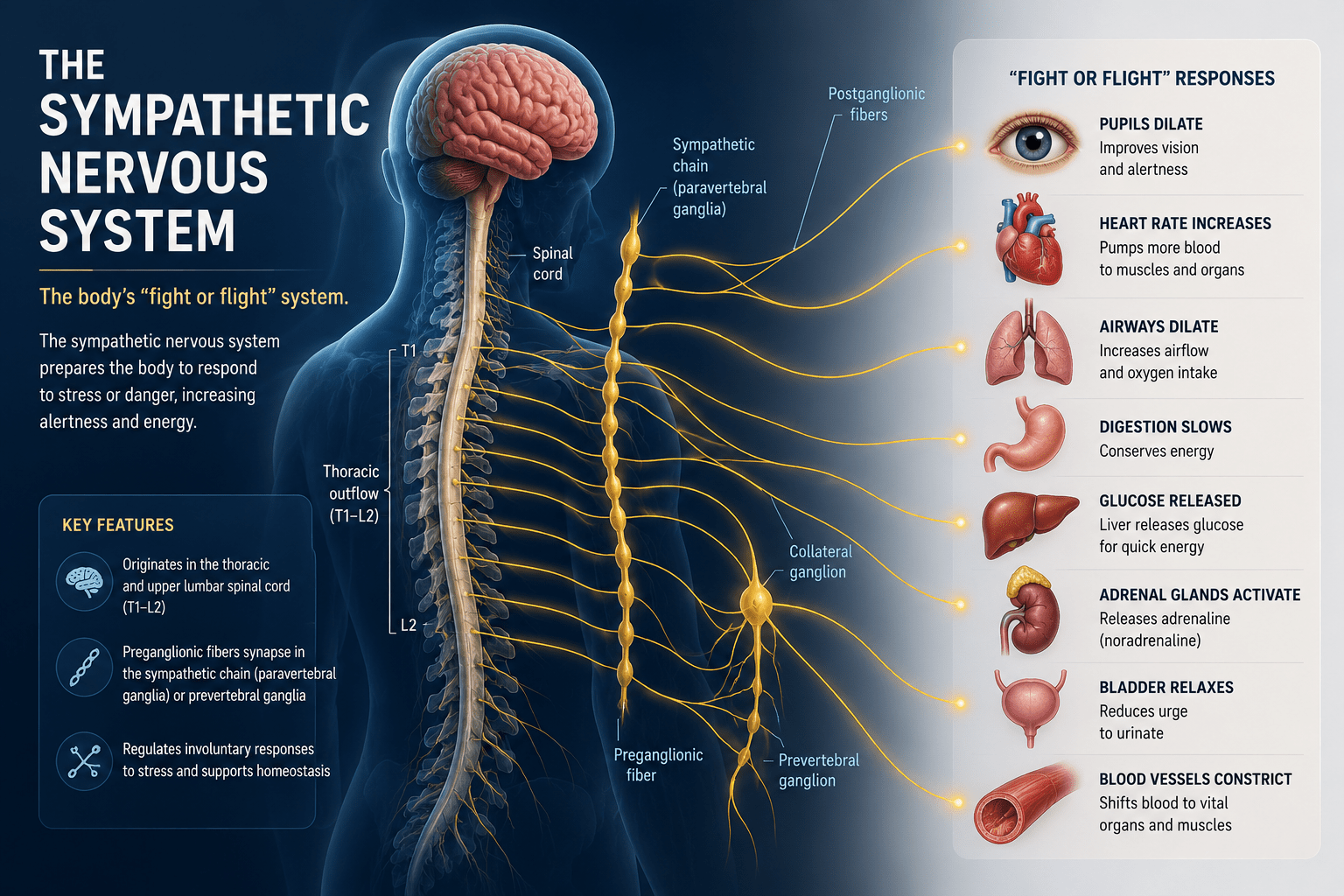
The Sympathetic Nervous System is often referred to as the “fight, flight, or freeze” system. It automatically activates when the brain perceives a threat, whether real or imagined.
When the SNS is activated:
- Heart rate increases
- Blood pressure rises
- Stress hormones such as cortisol and adrenaline are released
- Muscles become tense
- Digestion slows
The brain becomes focused on survival
While this response is essential for protection, chronic activation can contribute to:
Anxiety
Panic attacks
Insomnia
Chronic stress
Emotional reactivity
Physical tension and pain
Over time, repeated activation strengthens neural pathways associated with fear, worry, and stress.
How Suggestions Influence the Nervous System
The brain does not respond only to external events; it also responds to internal experiences such as thoughts, images, memories, and expectations.
Research has demonstrated that imagined experiences can activate many of the same neural networks involved in real experiences. When therapeutic suggestions are delivered during hypnosis, the brain may respond as if the suggested experience is occurring in the present moment.
For example, when a person vividly imagines feeling calm, safe, and confident:
The brain processes those experiences neurologically.
Stress-related neural circuits may become less dominant.
Relaxation pathways become more active.
The autonomic nervous system begins shifting toward balance.
Repeated positive suggestions can gradually weaken stress-based responses while strengthening healthier emotional and physiological patterns.
Hypnosis and Reduced Sympathetic Activation
During hypnosis, individuals typically enter a state of focused attention combined with physical and mental relaxation.
This state is often associated with:
Reduced muscle tension
Slower breathing
Lower heart rate
Reduced stress hormone production
Increased emotional regulation
As the Sympathetic Nervous System quiets, the brain becomes more receptive to new learning and new associations.
A hypnotherapist may introduce suggestions such as:
“You can feel calm and safe in situations that once caused anxiety.”
“Your mind and body are learning to relax automatically.”
“Each breath signals safety to your nervous system.”
These suggestions help create alternative neural pathways that compete with older stress-based patterns.
Neuroplasticity: Rewiring Stress Responses
Every thought and emotional response involves neural activity. Repetition strengthens these pathways according to the principle often summarized as:
“Neurons that fire together, wire together.”
When therapeutic suggestions are repeatedly experienced during hypnosis:
New neural connections are activated.
Old stress responses receive less reinforcement.
Emotional triggers may lose their intensity.
The brain learns alternative responses.
New patterns become more automatic over time.
This process represents neuroplastic change—the brain literally learning a different way to respond.
The Role of Safety and Emotional Regulation
One of the most important therapeutic effects of hypnosis is helping the brain experience a sense of safety.
When the nervous system perceives safety:
Sympathetic activation decreases.
Emotional centers of the brain become less reactive.
Higher cognitive functions become more accessible.
Learning and adaptation improve.
Suggestions that reinforce safety, resilience, self-confidence, and control may help create conditions that support long-term emotional and physiological change.
Hypnotherapy and the Mind-Body Loop
The relationship between thoughts, emotions, and physiology is circular:
Thoughts influence emotions.
Emotions influence the nervous system.
The nervous system influences bodily sensations.
Bodily sensations reinforce thoughts and emotions.
Hypnotherapy can intervene in this loop by introducing therapeutic suggestions that encourage healthier patterns at both the psychological and physiological levels.
As positive suggestions are accepted and repeated, the brain and nervous system may begin to respond differently, creating a foundation for lasting change.
Conditions That May Benefit
By helping regulate sympathetic nervous system activity and promoting neuroplastic change, hypnotherapy may assist with:
Anxiety and stress
Panic symptoms
Performance anxiety
Sleep difficulties
Habit change
Confidence building
Emotional resilience
Trauma recovery support
Stress-related physical symptoms
Conclusion
Hypnotherapy works by harnessing the brain’s natural ability to learn, adapt, and change. Through focused attention and therapeutic suggestion, it may help reduce excessive Sympathetic Nervous System activation while encouraging the development of healthier neural pathways.
As stress-based patterns become less dominant and new pathways are strengthened, individuals can experience greater calmness, emotional flexibility, and resilience. This interaction between suggestion, neuroplasticity, and the nervous system illustrates how the mind can influence the brain and body to support healing and personal transformation
Contact for further information.
Professional Hypnotherapy Training and Certification
Academy of Hypnosis. Www.academyofhypnosis.com
Professional Clinical Hypnotherapy Services
Hypnotherapy SA www.hypnotherapysa.com